
Sustainability - Your Strategic Advantage from Day One
Whoever founds a company today has a unique opportunity: to anchor sustainability from the beginning as the strategic core of the business model and thus to be permanently more competitive, more attractive to investors, and more resilient to market changes.
Challenges such as climate change, energy transition, demographic change, and resource scarcity are fundamentally transforming markets, customer expectations, and legal frameworks. Start-ups that consider these developments early on are better prepared for risks and recognize genuine business opportunities in them.
Sustainability as a Comprehensive Business Concept
Did you know? The term "sustainability" comes from 18th-century forestry: do not take more than can grow back. This principle applies today equally to resources, talent, capital, and trust.
Today, sustainability is understood as a holistic business concept that encompasses three dimensions:
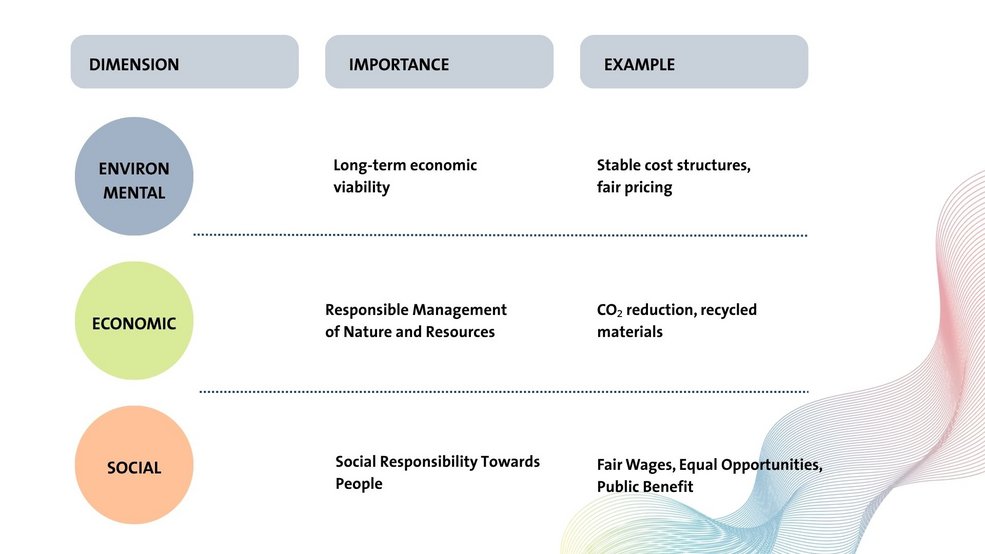
In the international and business context, these three pillars are referred to as ESG: Environment, Social, and Governance.
For you as a founder, this means concretely: ESG is not a reporting framework for large corporations. It is a thinking framework that helps you build your company so that it works long-term, is economically viable, socially accepted, and ecologically responsible.
ESG doesn't work the same way for every company, but it works for every company.
Why ESG is Relevant from the Start
Even if your company doesn't have to follow legal reporting rules yet, the requirements are coming anyway.
Banks now give loans based on ESG rules
Investors like start-ups that care about sustainability
Business partners ask: How sustainable are you?
Sustainability becomes important for competition early on. Companies that build ESG into their business from the start avoid costly changes later and are more attractive to investors and partners.
SDGs: Global Goals as Market Opportunities
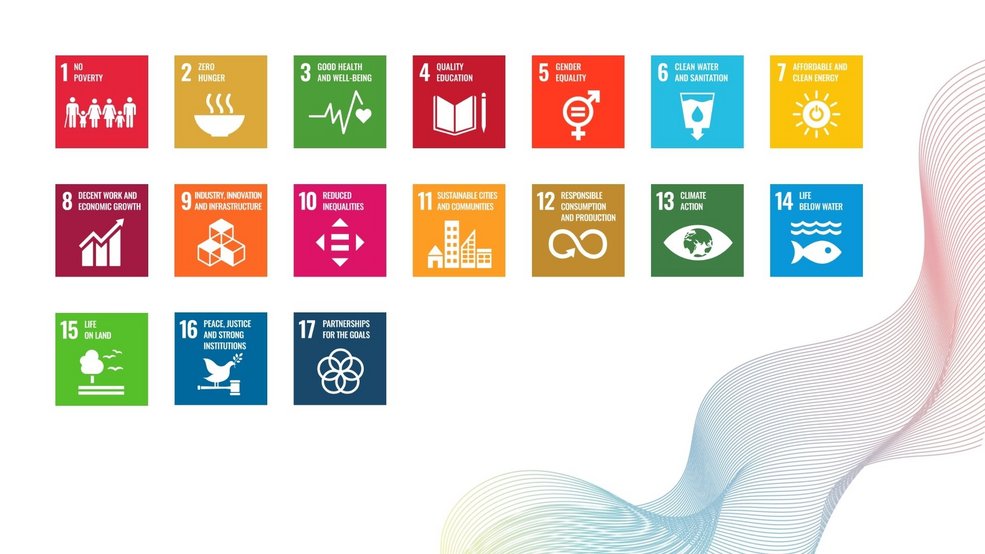
In 2015, the United Nations set up the 2030 Agenda with 17 Sustainable Development Goals (SDGs). As a founder, the SDGs are more than just politics:
When an SDG is addressed, there is real need and real business opportunity.
The SDGs are for countries, companies, and society. Unlike ESG, they are not required by law, but they show you where the world is heading.
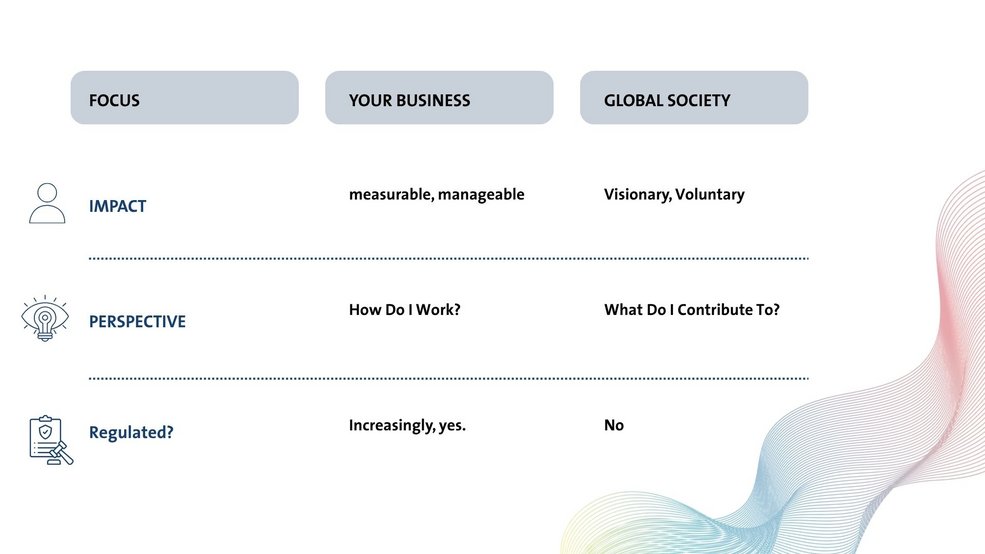
ESG actions often connect directly to the SDGs. A single business decision can support multiple goals at the same time.
Examples
Example 1 – Social Sustainability:
A company makes sure all employees are treated fairly no matter their gender, age, or abilities. They also pay equal wages for equal work. This supports SDG 8 (Decent Work) and also helps SDG 5 (Gender Equality).
Example 2 – Environmental Sustainability:
A founder chooses packaging made from 100% recycled material. This cuts CO₂ emissions, lowers material costs over time, and gives a strong selling point. It's directly linked to SDG 12 (Responsible Consumption and Production).
Example 3 – Governance:
A founder sets up clear ethics rules from day one. This includes anti-corruption policies, open decision processes, and safe handling of customer data (GDPR). This builds trust with investors, business partners, and customers. It supports SDG 16 (Peace, Justice and Strong Institutions).
Measures for Sustainable Business Development
Now for the real work: Which sustainability measures fit your company and how do you create real value? Ask yourself three key questions when you build your strategy.
What do I save? Which measures cut costs in energy, materials, or staff?
What do I gain? Which measures open new customers, markets, or partnerships?
What do I protect? Which measures make my company stronger against rule changes or social shifts?
Think about environmental and social measures, but also how to handle risks and keep your ability to innovate strong. Also think about how sustainability can strengthen your marketing strategy, especially in what you sell and how you talk about it.
Important:The measures you choose should always connect directly to your business model and create real value - whether that's saving costs, growing sales, or securing your future.
Example Measures by ESG Areas
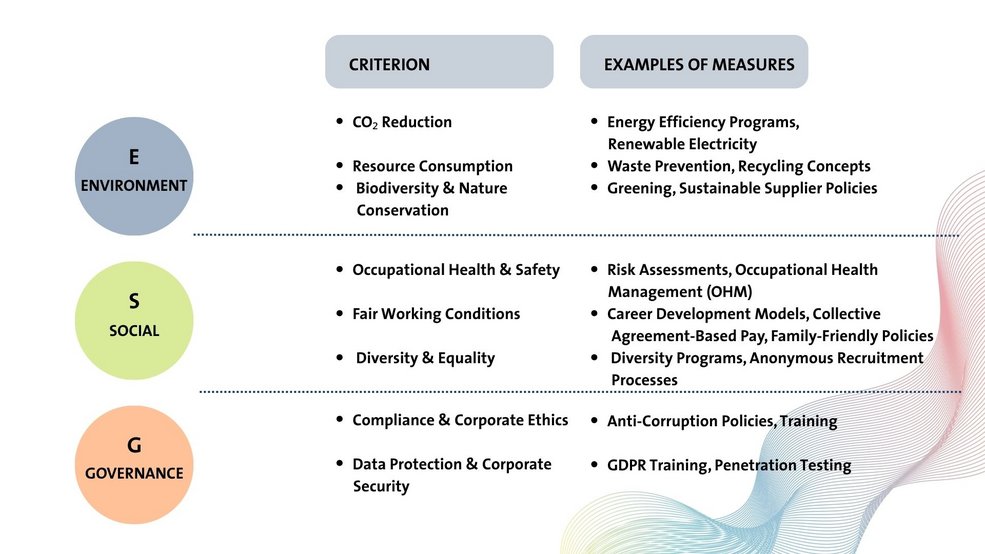
How to Develop Your Own Measures
Follow these three steps:
1. Check what matters: Which ESG criteria are most important for your industry, product, or service?
2. Plan your actions: What concrete steps can you realistically take: today, in one year, in three years?
3. Describe the value: For each action, write down what economic, environmental, or social benefit it brings and how it strengthens your business model.